
Inclusive Middle Grade Books That Aren't a Lesson
Picture books get most of the inclusive-shelf advice. Then a kid turns eight and the shelf falls off a cliff: either issue novels with discussion questions, or nothing. This guide is the missing middle. Funny, specific, rereadable. Identity as a life, not a unit.
Filter our catalog by middle grade when you want the longer list. What follows is a starter five we actually hand to families.
What changes after picture books
Middle graders can smell a lesson from the first chapter. They want friends, a school that is unfair in ways they recognize, and a plot that is not a pamphlet. Graphic novels help because the jokes land in the same panel as the wound. We lean on them here on purpose.
The five
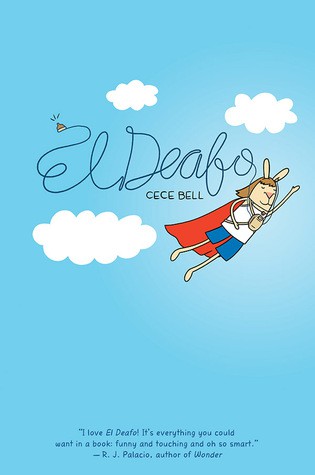
El Deafo is Cece Bell's hearing aid as a superpower and a problem in the same panel. Deafness as a life, not a metaphor for not listening. Let them pick the page where Cece is funniest. Start there, not with the diagnosis. Who it's for: Deaf and hard-of-hearing kids, and friends who need the friendship plot, not a medical one.
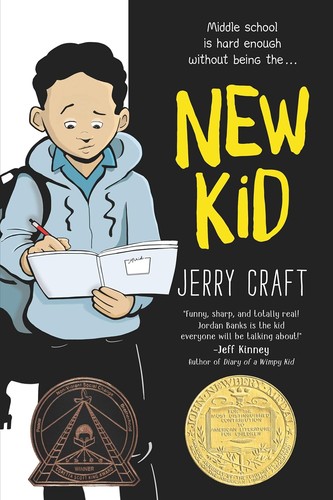
New Kid is Jordan Banks drawing his way through a mostly white private school. The jokes work because the microaggressions are specific. Keep paper nearby. They may want to draw the scene instead of talking it. Who it's for: Black kids in white rooms, and anyone who thinks a graphic novel is the easy version.
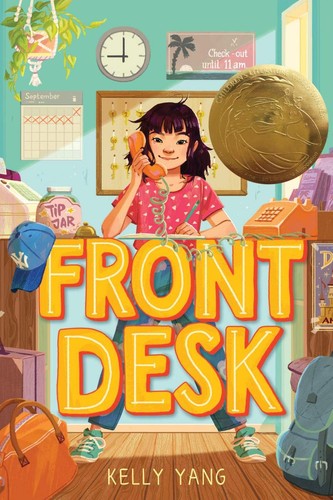
Front Desk is Mia Tang running a motel desk, writing, and refusing to stay quiet about who gets believed. Funny in the places most immigrant stories get solemn. Who it's for: kids who translate for their parents, and readers who want a motel, a notebook, and a fight worth having.
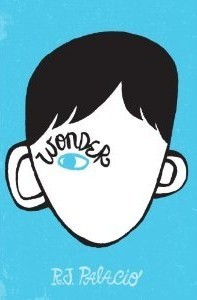
Wonder is the novel families ask for by name. Auggie is a person. Other people keep making his face the assignment. Read it with them. Do not assign it as character education and walk away. If your child needs disability without the viral-book weight, start with El Deafo instead.
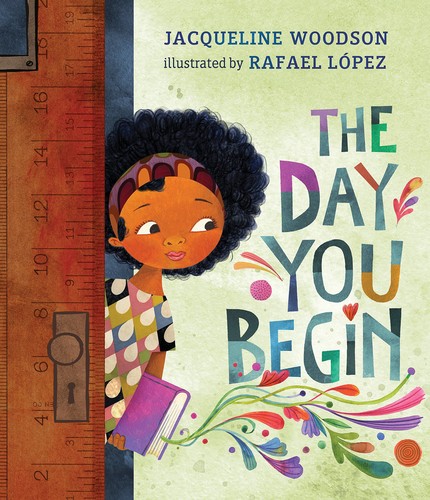
The Day You Begin is still a picture book, and we still put it on this shelf for the eight-year-old who will not touch a thick novel yet. Jacqueline Woodson holds the odd-one-out feeling without preaching it away. Use it as a bridge night between picture books and the graphic novels.
How to hand these over
Do not say “this is about diversity.” Say “this one is funny” or “this one is about a motel” or “this one has a superhero hearing aid.” Let the book do the introducing. After a sitting, one question is enough. The prompts live on each book page.
If they bounce off a title, it is not a moral failure. Try another format. Graphic novels are not a lesser step. For a lot of readers they are the right door.
Where to go next
Disability: more titles on the disability hub. Immigration: immigration books. When they age into YA, use starting a YA inclusive shelf. Teachers who still need the rug set should stay on the classroom starter.
This shelf
5 books · buy on Bookshop, or save the list
Ages 8–12
El DeafoCece Bell
The author recounts in graphic novel format her experiences with hearing loss at a young age, including using a bulky hearing aid, learning how to lip read, and determining her "superpower."
Ages 8–12
New KidJerry Craft
Perfect for fans of Raina Telgemeier and Gene Luen Yang, New Kid is a timely, honest graphic novel about starting over at a new school where diversity is low and the struggle to fit in is real, from award-winning author-illustrator Jerry ...
Ages 8–12
Front DeskKelly Yang
Mia Tang has a lot of secrets. Number 1: She lives in a motel, not a big house. Number 2: Her parents hide immigrants. Number 3: She wants to be a writer. It will take all of Mia's courage, kindness, and hard work to get through this year.
Ages 8–12
WonderR.J. Palacio
This modern classic inspired the Choose Kind movement, a major motion picture, and countless conversations about empathy, compassion, and acceptance. “Rich and memorable.”—The New York Times Book Review NAMED ONE OF THE BEST ...
Ages 3–8
The Day You BeginJacqueline Woodson
National Book Award winner Jacqueline Woodson and two-time Pura Belpré Illustrator Award winner Rafael López have teamed up to create a poignant, yet heartening book about finding courage to connect, even when you feel scared and alone.